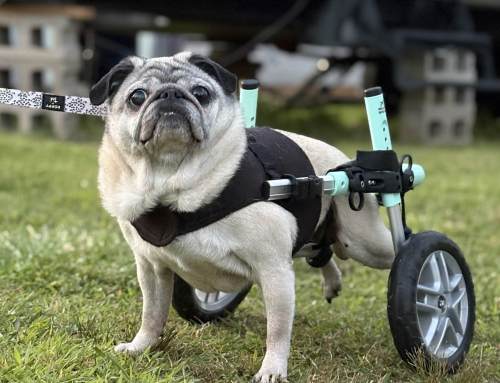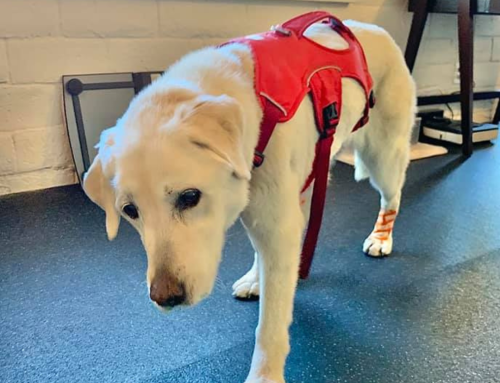
It’s well known that dogs don’t show their pain like humans do. Dogs are often described as “stoic” or that they have a “high pain tolerance.” However, we fail to recognize that how dogs show their pain is quite different than we do – we tend to whine.
Our dogs often don’t vocalize and waiting until they cry or whine to realize they have pain, may be allowing them to suffer unfairly in silence. In this series of blogs, we will explore the different ways our dogs show us they have pain. This blog will cover changes in behaviour. Let’s recognize that behaviour changes in dogs can happen for many reasons such as stressful life events (e.g. death of a family member or other pet or a move), an event that evoked fear (e.g. an attack by another dog), separation anxiety or an illness to name a few. Another reason for a sudden change in behaviour that many owners miss is pain. Here are 5 common behaviour changes to be aware of that may be the result of pain:
1. Avoidance or changes in interactions with other members of the household
Very simply, if it hurts to be touched, made to move out of the way or jostled, it can be easier to avoid the situation in the first place. If it’s painful to get up and come to you, maybe that’s why they aren’t greeting you at the door anymore. There are some dogs that will become more attention seeking when they hurt but its the change in what is normal that needs your attention.
2. Noise Phobia
A sudden exposure to an unexpected, loud noise can trigger noise anxiety or phobia BUT don’t just chalk increases in noise sensitivity up to that alone. Your dog should be assessed by your veterinarian or canine rehab professional to determine if there is another underlying cause of this change in behaviour. If everything checks out health wise, THEN it is time to work on behaviour modification with an appropriate trainer.

3. Change in Personality
Irritability or grumpiness can be easily chalked up to a dog “getting older” but don’t let it! Changes in personality can change gradually over a lifetime, especially as your dog matures, but changes in temperament and personality, especially if happening quickly, should prompt a physical exam of your dog.
4. More Reactive to Other Dogs
This is similar to #1. If a dog has pain, they are likely to want to avoid interactions or situations that can increase the pain. And consider this – how friendly and jovial do you feel when you’ve got a headache, toothache or back pain? You may present yourself well but on the inside you might not feel that way…you might feel ready to snap!
5. Unwilling to Take Part in Normal Activities
This is another instance in which you really need to know your dog well. Do they no longer want to play with their toys, go for a walk or snuggle with you on the couch? Again, ask yourself why. Pain may be the answer.

I think my dog has pain, what do I do next?
It’s time to head to the vet to discuss what you’ve made note of. Your vet should do a thorough physical exam to determine the source of the pain. It could be muscular or joint, or it could be a dental, anal gland or ear issue! Let your vet figure it out and discuss options for treatment.
If it’s a musculoskeletal issue, such as arthritis or a muscle strain, then seek out rehabilitation services like Pawsitively Fit to help get your dog back in good form and back to their usual self!
Shauna is just simply the best physiotherapist that Holly, my 13-year-old Lab, ever had! Shauna managed Holly, who recently transitioned into spirit, with ease and equanimity – and Holly was variously alert, nicely tired and satisfied as a result. Shauna the Dog-Lover is friendly, adaptable and very competent. In addition to regularly scheduled appointments, Shauna would come on very short notice when I needed her to check out anything. Shauna provided all the information I needed, and she came several times to make sure that Holly’s mobility cart fit well. Shauna provides wellness exams and ongoing preventive care for dogs, and I wouldn’t hesitate to have her care for any of my dogs! I highly recommend that anyone looking for a canine physiotherapist contact Shauna!